Monday, November 23, 2026
|

TECH & VENTURE

Technology Explained. Ventures Decoded.

High-Throughput GraphQL vs REST in Microservices

Architectural Benchmarks Comparing GraphQL Federation and REST Gateways Across Latency, Cacheability, and N+1 Query Pitfalls.
By Elena Rostova • New York / Berlin Bureau
Nov 02, 2026• 9 min read
High-Throughput GraphQL vs REST in Microservices

Figure 14: Gateway latency comparison across federated GraphQL and cached REST endpoints.

Key Findings & Architecture Notes

  • •REST endpoints paired with edge CDN caching provide superior tail-latency for read-heavy public data.
  • •GraphQL eliminates over-fetching on mobile clients, but introduces complex query planning overhead on the backend gateway.
  • •Deploy persistent query whitelisting to protect GraphQL endpoints from malicious nested query DOS attacks.

Edge Latency & Cacheability Realities

Because GraphQL requests typically use POST verbs, standard HTTP CDN caching requires explicit query hashing. For high-volume microservice fleets, REST remains simpler and significantly faster at the 99th percentile.

Subject Index

APIsGraphQLRESTMicroservicesPerformance

About Elena Rostova

Lead Systems Engineer & AI Systems Researcher • New York / Berlin Bureau

Elena Rostova specializes in distributed microservices, web standards, and autonomous multi-agent AI architectures. She previously led frontend systems engineering at high-growth European tech ventures and writes on agentic workflow protocols.
Further Reading • Technology Desk

Full Desk Archive →
Modern Software Architecture: Designing Resilient Distributed Systems
Technology•15 min read

Modern Software Architecture: Designing Resilient Distributed Systems

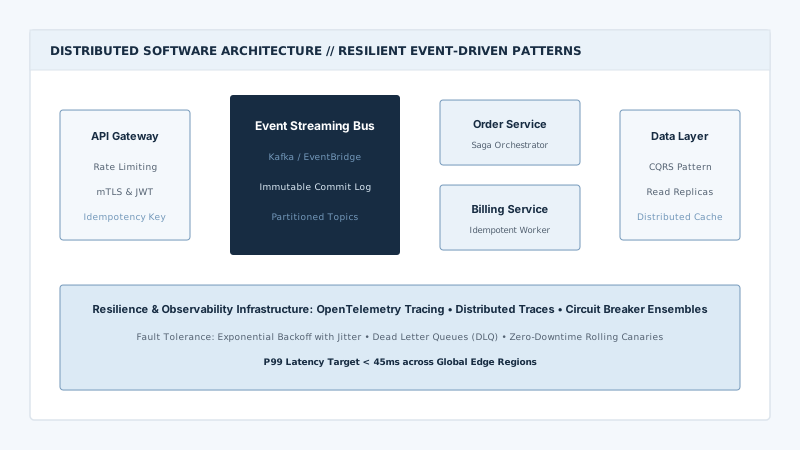
Distributed systems will inevitably experience partial network partitions and downstream timeouts. Building a system that stays operational requires abandoning naive synchronous REST chains in favour of event-driven message architectures and idempotency guards.

By Kenji Sato
Enterprise Cybersecurity in the Zero-Trust Era
Technology•10 min read

Enterprise Cybersecurity in the Zero-Trust Era

In multi-cloud enterprise deployments, the corporate VPN perimeter is obsolete. Modern security architectures enforce continuous identity verification, ephemeral SPIFFE/SPIRE certificates, and least-privilege service meshes.

By Sarah Lin
The Executive Dispatch

Independent Analysis on Software Systems & Venture Capital

Published twice weekly from our bureaus in San Francisco, London, Tokyo, and New York. No sponsored promotions, marketing hype, or unvetted press releases.

Zero spam. Delivered every Tuesday & Friday. Unsubscribe at any time.